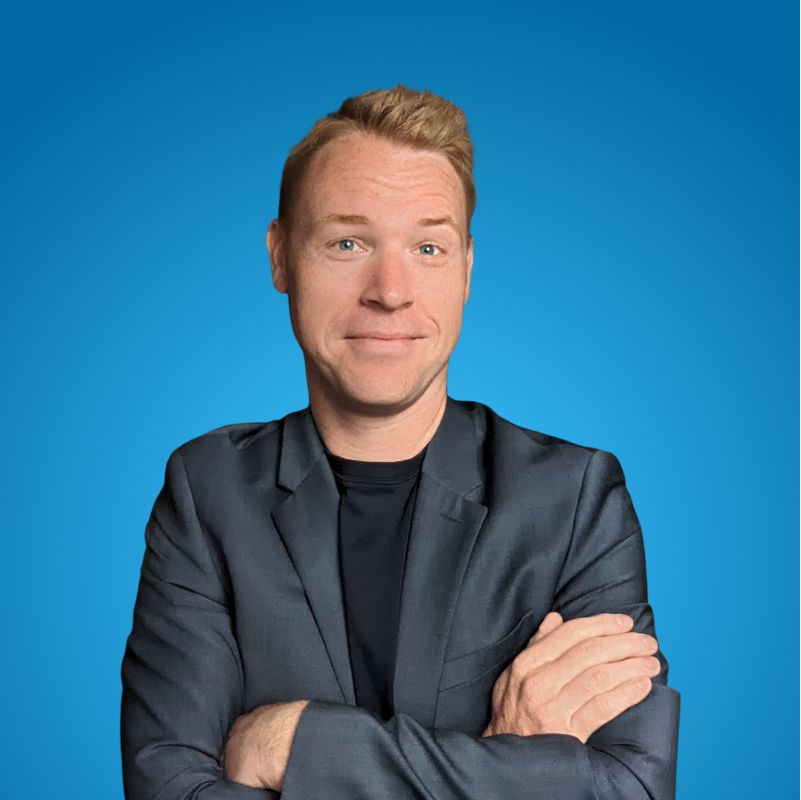
About Me

I am an open-source software expert and technical program manager.In 2009, I co-founded GDS to support awareness, advocacy, and adoption of open licensing. As a member of the AAAS, AIBS, and CFI, I advocate greater awareness of science and critical thinking.

Continue reading »

This Site is Now Entirely on S3

Okay, so I got tired of the MongoHQ server connection issues that caused exceptions on my EC2 instances, and since this particular instance was running only this blog, I decided to make a change. I have been curious about the potential for hosting a site on Amazon Web Services’ Simple Storage Service (S3) since their announcement earlier this year of support for serving an index.html, if present when just a directory is requested, e.g. www.joshdmiller.com returns www.joshdmiller.com/index.html.

As this blog is relatively simple, I thought it would be a prime candidate to test this. Using Jekyll, a static site generator written in Ruby, I rewrote the code for this site, which involved only a few major steps: (1) seting up the basic infrastructure of the site; (2) translating the SCAML templates I used in Scalatra back into HTML; (3) translating the dynamically-generated content into its static equivalents. The posts were already in Markdown format, so nothing was really needed here, save some YAML Front Matter, per Jekyll’s docs. All said, this took only a few hours and I don’t have to pay for a server anymore. My verdict: Jekyll’s pretty cool.

I’ll throw the code up on a public repository within the coming days in case someone wants inspiration.

Citeplasm Wiki is Live!

After much ado, the Citeplasm Wiki is live! Though there is not much information currently available, it will soon be populated with design documentation. As Citeplasm is a consumer product, the wiki is hosted under Emergenesis’ domain here.

For those who are unaware, Emergenesis is the consumer division of Gestalt Data Services and follows all GDS policies and procedures regarding open-source. Therefore, the copyright to Citeplasm’s source code is owned by the Gestalt Foundation, Inc.

New Site Design!

Welcome to my new website! This is a radical change in design from light blues and whites to dark grays with pastel accents. My old website was a Pylons (Python) application with a custom blog engine where the articles were stored in HTML. This site, however, is in Scalatra (Scala) and the articles are stored in Markdown for greater versatility.

Unfortunately, this means I cannot directly import my old blog entries. I will be migrating some of the more interesting ones over the next few days, however. I the meantime, I apologize for the bareness.

I hope you enjoy the new site - and keep in touch.

Citeplasm Announcement

At GDS, we just kicked off a new public project with this working logo:

Citeplasm is a best-in-class research and collaboration tool for academic professionals and small businesses. It provides a one-stop solution for locating sources of information, managing the citation of those sources, maintaining an interactive database of the user’s notes and ideas related back to sources, and a comprehensive suite of tools to assist in the conception, drafting, and management of academic & professional papers.

At GDS, we are pretty excited about this project and are looking forward to launching a public beta in January 2012. In the coming weeks and months, I’ll keep everyone updated about our progress and perhaps post some information on Citeplasm’s architecture for those interested in the creation of cloud-based applications. After all, everything we do at GDS is open-source!

Where's Our Skepticism

I was at a holiday party recently where some children and a few adults were showing off a Power Balance Bracelet; I had never heard of this particular magic amulet, so I agreed to a demonstration. A young teenager gave me a “push test”. I was asked to stand on only one leg while a relatively gentle push to my shoulders was administered. I was given the bracelet, and the test was repeated.

“See?” The proponent argued. “Don’t you feel more balanced?”

I admit I did feel more balanced during the admittedly unscientific push test while wearing the bracelet. And so I proverbially put on my critical thinking hat and pondered the result. Could it be the weight of the object like a tight rope walker and his pole? Was I unintentionally pushed lighter as the pusher knew I was wearing the bracelet? Was it all, so to speak, “in my head”?

There was no shortage of explanations from its users. One believer proffered the hypothesis he recollected: the bracelets gather the negative ions from your body and send them out to the environment in discrete pulses. Another insisted they worked by balancing the human body’s “natural energy field” (the words “chi” and “chakra” came to mind but were never mentioned). And another did not know how it worked but was sure it did as he heard NASA gives these bracelets to its astronauts before rocketing above Earth.

Continue reading »